

How AquaEco Cut a KES 120K Monthly Power Bill
Introduction
Electricity costs are one of the biggest challenges for borehole owners in Kenya. Businesses that depend on borehole water—such as water vendors, apartments, farms, and institutions—often spend tens of thousands of shillings every month just to pump water.
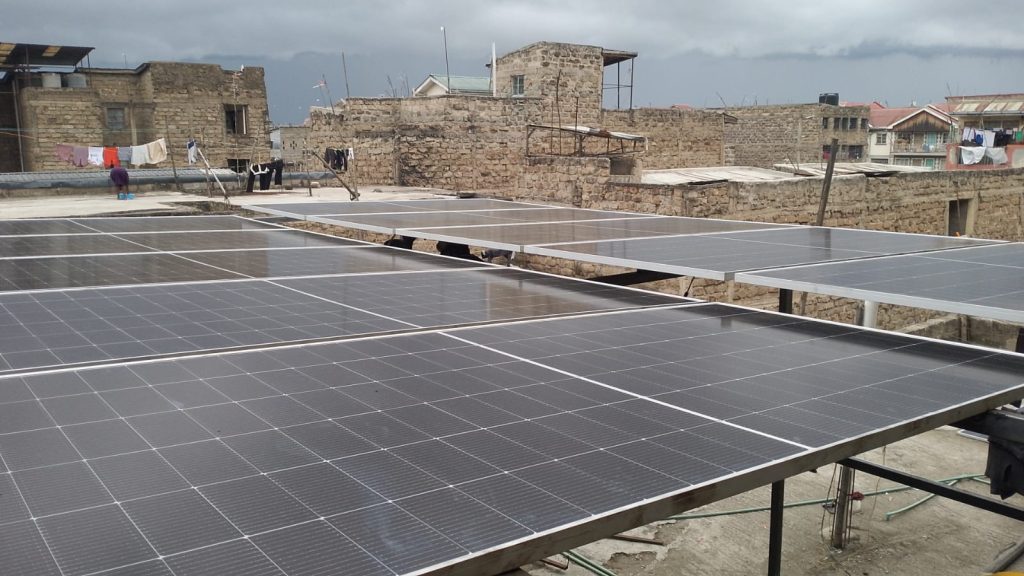
This case study highlights how AquaEco Water Solutions helped a water vendor in Kariobangi, Nairobi convert a conventional electric borehole system into a hybrid solar-powered water pumping system, reducing a KES 120,000 monthly electricity bill to almost zero.
The project demonstrates how solar energy can transform water supply operations and improve profitability.
The Challenge: Rising Electricity Costs for Water Pumping
The client operates a water vending business supplying nearby apartments in Kariobangi.
The borehole was already functioning, but it relied entirely on grid electricity to power the pump. Over time, electricity costs rose significantly, and the monthly power bill reached about KES 120,000.
At the same time, water demand continued to grow.
The system needed to supply approximately 75,000 liters of water per day, making it expensive to run using conventional electricity.
For many borehole owners, high energy costs are a common problem because pumping water from deep deep wells/ borehole results in significant power consumption. Switching to solar energy can eliminate these ongoing electricity expenses since solar system use free energy from the sun. https://aquaecowatersolutions.co.ke/solar-powered-borehole-pumps-kenya/
AquaEco’s Solution: hybrid Solar-Powered Borehole Pumping System
After conducting a full system assessment, AquaEco designed a hybrid solar-powered borehole pumping system tailored to the client’s water demand and borehole specifications.
Project Specifications
- Location: Kariobangi, Nairobi
- Borehole depth: 200 meters
- Pump installed: 7.5 HP submersible pump
- Solar system: 24 bifacial solar panels (605W each)
- Water demand: 75,000 liters per day
- Water storage capacity: 25,000 liters
- Project cost: Approximately KES 750,000
Solar borehole pumps are capable of lifting water from depths exceeding 200 meters, making them suitable for deep boreholes common in Kenya.https://aquaecowatersolutions.co.ke/solar-powered-borehole-pumps-kenya/
Increasing Storage Capacity for Reliable Supply
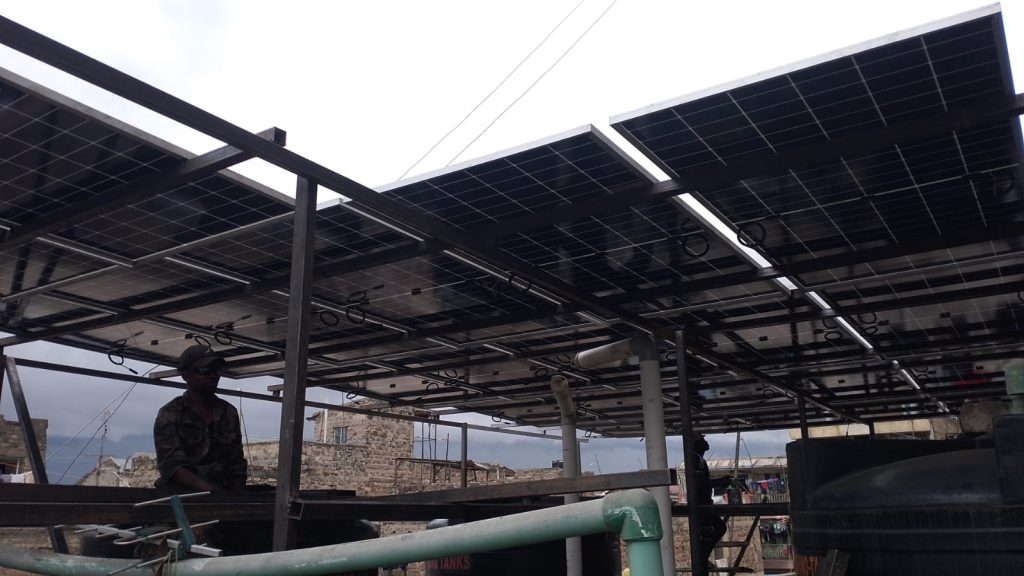
During the initial site assessment, AquaEco identified another issue: insufficient water storage.
The client initially had only one 5,000-liter tank, which was too small to meet daily demand.
AquaEco recommended increasing storage capacity by installing four additional tanks, bringing the total storage capacity to 25,000 liters.
This allows water to be pumped efficiently during peak sunlight hours and stored for distribution throughout the day.
Results: Immediate Cost Savings and Improved Operations
The solar upgrade delivered immediate and measurable results.
1. Massive Energy Cost Reduction
Before the upgrade:
KES 120,000 electricity bill per month
After solar installation:
Near-zero monthly pumping cost
hybrid Solar-powered pumping systems eliminate electricity or fuel costs because they rely sorely on renewable solar energy once installed but can be switched back to electricity when need be. Kenya.https://aquaecowatersolutions.co.ke/solar-powered-borehole-pumps-kenya/
2. Reliable Daily Water Supply
The new system comfortably supports the client’s 75,000-liter daily water demand, ensuring consistent water supply for nearby apartments and customers.
Solar systems are particularly reliable because they are not affected by power outages or fuel shortages.
3. Increased Business Profitability
With electricity costs eliminated, the water vendor now benefits from:
- lower operating costs
- higher profit margins
- reliable pumping performance
- scalable water distribution
Solar water pumping systems initial cost may be high but it often pay for themselves within a few months through savings on electricity and maintenance.
Why Solar Borehole Systems Are Growing in Kenya
Solar-powered borehole systems are rapidly becoming the preferred solution for water pumping in Kenya because they offer:
- zero electricity bills
- low maintenance requirements
- long system lifespan (20–25 years for solar panels)
- environmentally friendly water supply
Solar systems also reduce dependence on the national power grid and protect businesses from rising energy tariffs.
Conclusion: A Smart Investment for Water Businesses
This Kariobangi project demonstrates how solar energy can transform borehole operations.
For water vendors, apartments, farms, and institutions, converting a borehole to solar can significantly reduce operating costs while ensuring a reliable water supply.
At AquaEco Water Solutions, we specialize in designing and installing customized solar-powered water systems tailored to each client’s needs.
Thinking of Converting Your Borehole to Solar?
If your borehole is costing you thousands in electricity every month, it may be time to switch to solar.
Contact AquaEco Water Solutions today to request a consultation and start your journey toward energy-free water pumping.

