

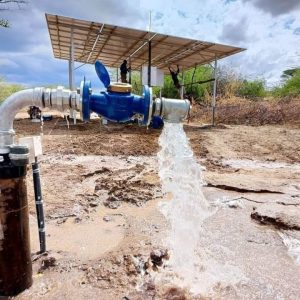
One of the most innovative solution is the solar powered borehole pumps in Kenya, this is because access to reliable and affordable water solutions is a growing concern for households, farms, schools, and businesses. By combining renewable energy with groundwater extraction, this system provides a sustainable, cost-effective, and eco-friendly way to pump water without depending on unreliable electricity grids or costly diesel generators.
What Is a Solar Powered Borehole Pump?
A solar powered borehole pump is a pumping system powered by photovoltaic (PV) solar panels. It converts sunlight into electricity to operate the pump, drawing water from underground aquifers to the surface. Unlike traditional pumps that rely on grid electricity or fuel, solar borehole pumps are designed for remote, off-grid, and rural applications in Kenya.

Why Choose a Solar Powered Borehole Pump in Kenya?
1. Reduced Energy Costs
Kenya’s high electricity tariffs and rising fuel prices make solar an attractive alternative. Once installed, the system runs on free solar energy with minimal operating costs.
2. Reliability in Remote Areas
Many rural communities lack access to grid power. A solar pump ensures 24/7 access to clean water, regardless of electricity availability.
3. Environmentally Friendly
Solar pumps reduce reliance on diesel generators, cutting carbon emissions and promoting green energy adoption.
4. Long-Term Investment
While the initial cost may seem high, the low maintenance and zero fuel costs make solar borehole pumps a wise investment.
5. Versatile Applications
- Domestic use: Homes, estates, and residential areas.
- Agriculture: Irrigation systems, livestock watering.
- Institutions: Schools, hospitals, churches.
- Commercial projects: Hotels, farms, factories.
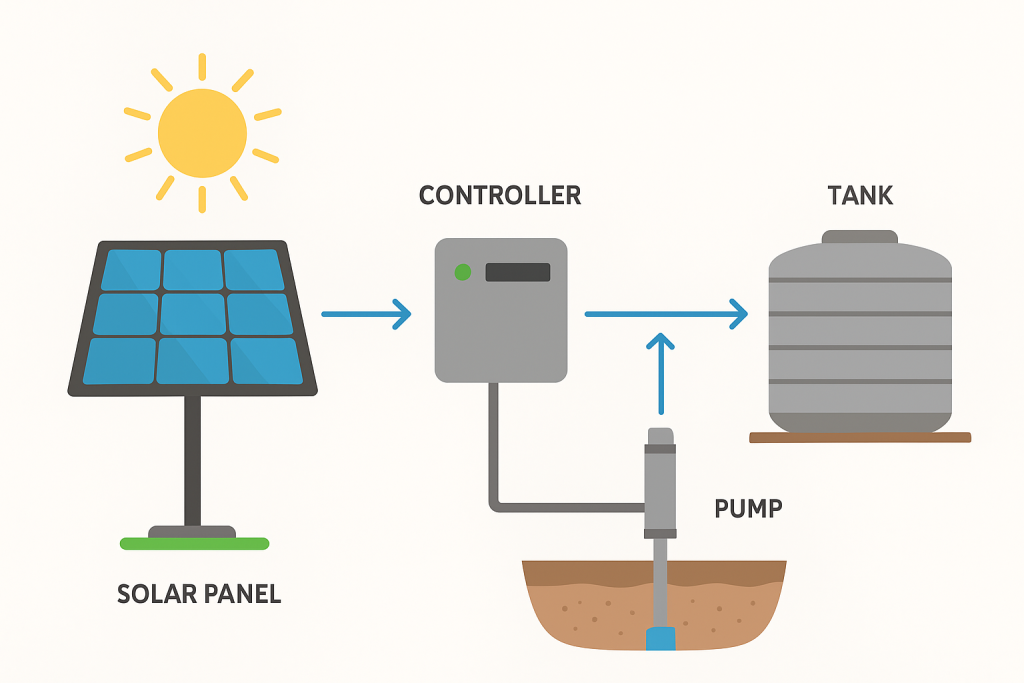
How Solar Powered Borehole Pumps Work in Kenya
- Solar Panels – Capture sunlight and convert it to electricity.
- Controller/Inverter – Regulates power supply to match pump requirements.
- Pump Unit – Installed inside the borehole to lift water.
- Storage Tank – Stores pumped water for later use.
- Distribution – Water flows to homes, farms, or irrigation systems.
Cost of Solar Powered Borehole Pumps in Kenya
The cost of a solar borehole pump in Kenya depends on:
- Pump capacity (liters per hour).
- Borehole depth (shallow vs. deep aquifer).
- Solar panel wattage.
- Water demand (domestic vs. irrigation).
On average, complete systems range between KSh 150,000 and KSh 500,000 for domestic setups, while large-scale agricultural projects may exceed KSh 1 million.
Benefits Over Diesel or Electric Pumps
- No fuel costs → Savings of up to 70% annually.
- Minimal maintenance → Solar panels last 20–25 years.
- Silent operation → No noise pollution compared to generators.
- Scalable systems → Can be expanded as water needs grow.
Challenges and Considerations
- High upfront cost → Requires proper budgeting and financing options.
- Sunlight dependency → Output is lower during cloudy or rainy seasons.
- Quality matters → Cheap, low-quality systems fail quickly; always source from reputable suppliers in Kenya.
Frequently Asked Questions (People Also Ask)
Q1: How much does a solar borehole pump cost in Kenya?
A solar borehole pump system in Kenya typically costs between KSh 150,000 and KSh 500,000 for households, and over KSh 1 million for large-scale farms or institutions.
Q2: Can a solar pump work for deep boreholes?
Yes. Modern solar pumps can lift water from depths of up to 250 meters, making them suitable for most boreholes in Kenya.
Q3: How many solar panels are needed for a borehole pump?
It depends on the pump size and water demand. A small domestic pump may need 2–4 panels (300–600W), while large agricultural systems may require 10+ panels (2kW and above).
📌 Next Read: Link to Step-by-Step Guide to Borehole Drilling in Kenya
Q4: Are solar borehole pumps reliable during cloudy days?
Yes. Pumps can still operate at reduced efficiency, and most systems are paired with storage tanks to ensure water availability even during low-sunlight days.
Q5: What is the lifespan of a solar borehole pump?
With proper maintenance, solar panels last 20–25 years, while the pump itself can last 8–12 years depending on usage and water quality.
Q6: Do I need a WRA permit for a solar borehole pump in Kenya?
Yes. All borehole projects in Kenya require a hydro-geological survey and approval from the Water Resources Authority (WRA), regardless of the pump type.
📌 Next Read: Link to Step-by-Step Guide to Borehole Drilling in Kenya
Conclusion
A solar powered borehole pump in Kenya is a smart investment for anyone seeking sustainable, affordable, and reliable water access. Whether for a household, school, farm, or business, this solution reduces dependence on costly electricity and fuels, while harnessing Kenya’s abundant sunshine.
Before installing, ensure you work with a licensed borehole drilling company and a reputable solar supplier like davisandshirtliff to guarantee long-term performance and compliance with Kenyan regulations.
📌 Next Read: How to Identify a Reliable Borehole Drilling Company in Kenya


3 comments