

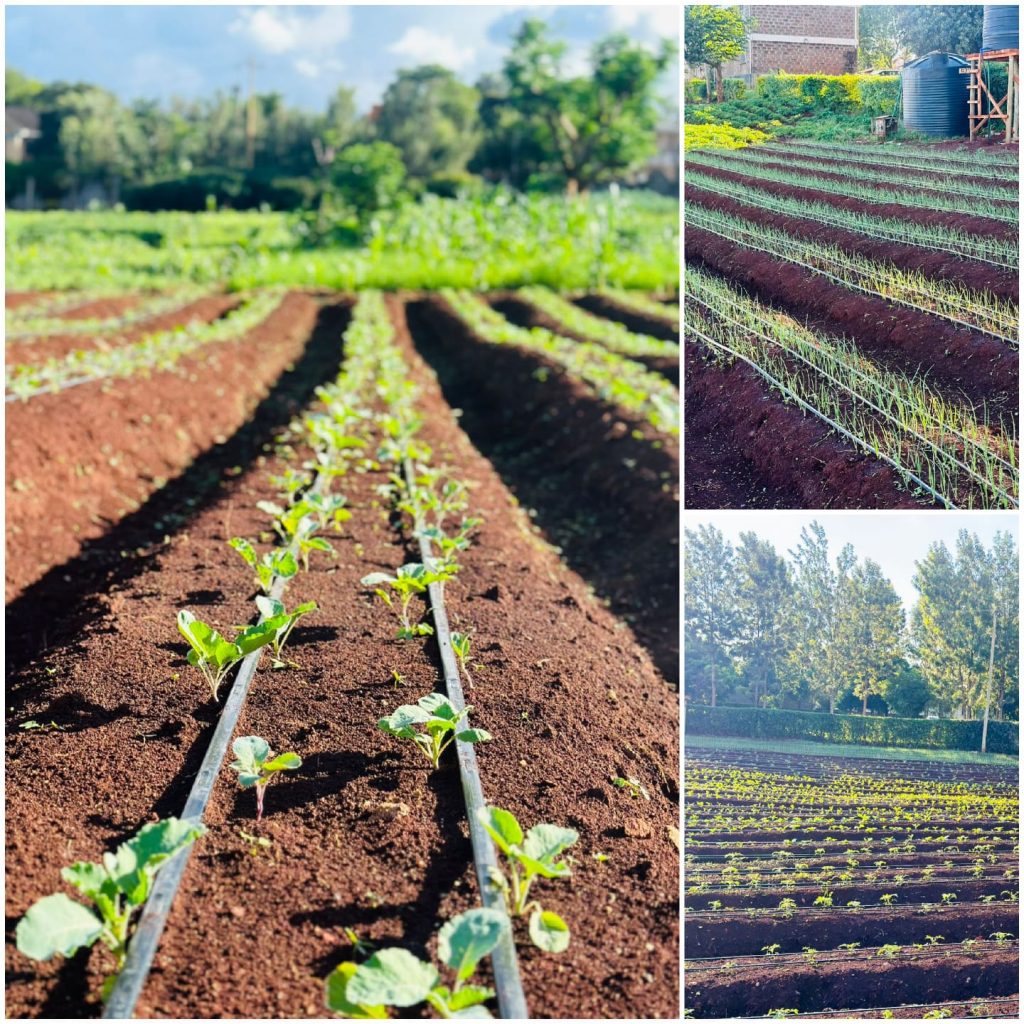
Smallholder farmers in Kenya face multiple challenges: unpredictable rainfall, rising input costs, and the need to boost yields while conserving water. Investing in a well-designed irrigation system can be one of the best decisions—offering stronger crop performance, year-round production and improved resilience. Below, we explore cost-effective irrigation options, what to look out for, and how to make the most of your investment.
Why Irrigation Matters for Smallholder Farms in Kenya
In many Kenyan regions, reliance on rainfed agriculture leaves farms vulnerable. According to a baseline study, approximately 61% of smallholder horticulture farmers in Kenya report using some form of irrigation equipment, but many still rely on buckets, jerry-cans or inefficient methods. https://www.water.go.ke/
By adopting affordable, efficient systems, farmers can:
- Expand cropping seasons and increase yield per acre.
- Conserve water and energy.
- Use nutrients more efficiently and reduce pest/disease pressure.
- Improve profitability and reduce risk during dry spells.
Affordable Irrigation Systems Suitable for Smallholder Farmers
Drip Irrigation Systems
Drip irrigation is widely cited as the most water-efficient system for small farms. It delivers water directly to the crop’s root zone, reducing wastage. For example, small-scale drip kits in Kenya range from KSh 2,100 for very small setups up to KSh 145,000 for one-acre commercial systems.
Advantages:
- Up to ~70% water savings compared with surface irrigation.
- Improved crop health, lower weed growth and reduced disease.
Considerations: Requires good filtration, clean water source, and periodic maintenance.
Sprinkler and Micro-Spray Systems
For slightly larger plots or where drip may not suit the crop layout (e.g., for forage, maize, vegetables over larger area), sprinkler systems are an option. According to Kenyan estimates:
- Impact or mega-net sprinkler systems cost around KSh 50,000/acre.
- Micro-sprinkler systems cost more (KSh ~85,000/acre).
While less efficient than drip, sprinklers are flexible and work well on uneven terrain.
Gravity or Furrow Systems (Low-Cost Alternatives)
For ultra-low budget or where terrain and water supply allow, furrow or surface irrigation remains viable. It’s the traditional method, but less efficient and more wasteful of water.
Best for: row crops tolerant of wetting (e.g., maize, beans) and where water is abundant.
Estimating Costs & Sizing for Smallholder Farmers
Cost is one of the biggest barriers, so realistic budgeting matters. Local Kenyan data gives a useful guide:
- Drip system cost per acre: ~KSh 75,000 to KSh 160,000 depending on number of drip lines per bed.
- Smaller plots (¼-acre) may cost ~KSh 28,000-40,000 for a drip system depending on complexity.
- Total system cost will also depend on pump, water source (borehole or dam), tank, filtration and labour. https://aquaecowatersolutions.co.ke/solar-powered-borehole-pumps-kenya/
To make affordable: - Choose modular expansion (start small, expand later).
- Use local materials and suppliers.
- Consider group procurement or cooperative buying for savings.
- Match system to crop value and water availability (high-value crops justify more investment).
Selecting the Right System for Your Farm
Smallholder farmers should ask:
- What’s my water source? (borehole, dam, river)
- What’s my farm size and cropping pattern?
- What crop(s) will I grow and how frequent are irrigation cycles?
- What is the terrain and soil type? (uneven slopes may favour sprinklers)
- What is my budget and what payback period can I accept?
- Are spare parts, maintenance and technical support available?
A supplier should conduct a farm assessment, check soil type, source water, layout and crop needs.
Maximizing Return on Investment
To make the most of your irrigation system:
- Choose high-value crops (vegetables, fruits) that can pay back quicker. For example, 1 acre under drip irrigation could yield 6-8 tons of tomatoes, with potential returns of KSh 800,000-1,000,000 for some farmers.
- Implement good agronomic practices (spacing, fertilization, pest control).
- Monitor and maintain your system (filters, pipes, emissions).
- Use harvest or market timing to get better prices.
- Keep water usage efficient—drip systems allow precise dosing.
Frequently Asked Questions (People Also Ask)
Q1: What is the cheapest irrigation system for a smallholder farm in Kenya?
The most affordable and efficient for smallholder farms is a small-scale drip irrigation kit. For instance, a 1/8 acre kit in Kenya costs from around KSh 18,000.
Q2: How much does it cost to install irrigation on 1 acre in Kenya?
For drip irrigation with 1 line per bed, costs start around KSh 75,000; with 2-3 lines per bed for intensive crops it may go up to KSh 130,000-160,000.
Q3: Which irrigation system saves the most water in Kenya?
Drip irrigation saves the most—delivering water directly to the roots and reducing evaporation and runoff. Estimates show up to ~70% water savings.
Q4: Is a sprinkler system suitable for a smallholder farm in Kenya?
Yes—but sprinkler systems are generally less water efficient than drip and may have higher initial costs for small plots. They’re more suitable for larger or uneven farms.
Q5: What are the maintenance costs for irrigation systems in Kenya?
Maintenance includes cleaning filters, checking pipes for leaks, replacing worn emitters, and ensuring pumps are functional. While data is less specific, reliable suppliers mention the need for periodic servicing.
Q6: Can I use my borehole for irrigation with these systems?
Yes—if you have a reliable water source (e.g., borehole), you can pair it with a suitable irrigation system. Ensure the pump capacity, water quality, and layout are suitable for your crop and system type.
📌 Next Read: Link to Step-by-Step Guide to Borehole Drilling in Kenya
Conclusion
For smallholder farmers in Kenya, adopting an affordable, efficient irrigation system is a key pathway to greater productivity, resilience and income. Whether you choose drip irrigation for vegetables or sprinklers for larger plots, matching your system to your water source, budget and crop needs is essential. The data show that with good design, modest investment and proper maintenance, you can achieve strong returns and sustainable farming.

